









In the healthcare industry, the efficient management and tracking of medical equipment are critical for providing quality patient care. A robust medical equipment tracking system is the linchpin that ensures that vital instruments, devices, and assets are readily available when needed.
This article delves into the intricacies of medical equipment tracking, highlighting the role of modern technology and showcasing RFID as a leading solution.
Understanding Medical Equipment Tracking
Medical equipment tracking plays a pivotal role in the seamless operation of hospitals and medical centers. In these dynamic environments, the availability of critical medical equipment can mean the difference between life and death for patients.
Additionally, lost medical equipment significantly hurts a healthcare facilities bottom line. Hospitals have reported millions of dollars in lost or misplaced equipment—one hospital lost over $11 million in assets over four years.

Why Medical Equipment Tracking Matters
According to HealthcareExecutive.com, 10% to 20% of hospital mobile assets end up getting lost or stolen. Efficient tracking ensures that vital instruments, devices, and assets are readily accessible when needed, allowing healthcare professionals to deliver prompt and effective care.
The Significance of Efficient Tracking
Medical facilities, from small clinics to large hospitals, house a plethora of essential equipment. This includes life-saving devices like:
- Ventilators
- Infusion pumps
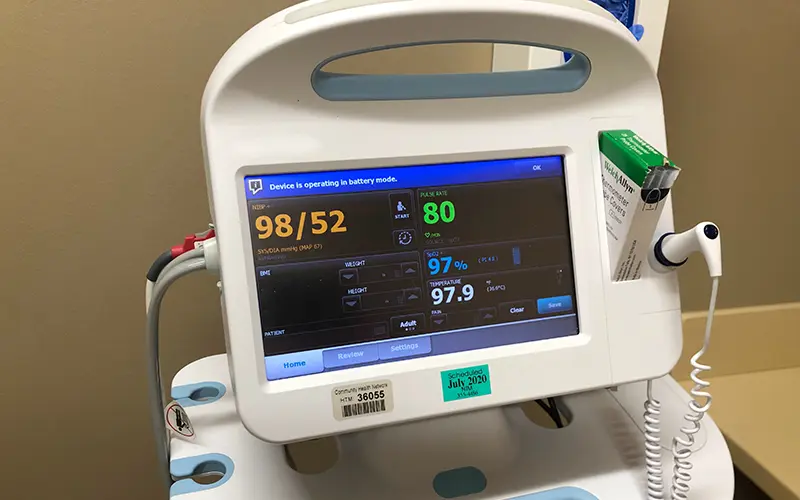
- Patient monitors
- Portable ECG Machines
- Defibrillators
- Various surgical instruments
- Wheelchairs and Stretchers
- Portable X-ray Machines
- Pulse Oximeters
- Blood Pressure Monitors
- Mobile Medical Carts
Ensuring that these items are readily available, properly maintained, and swiftly located is paramount for patient safety and operational efficiency.
The Challenges of Manual Tracking
In the past, many healthcare institutions relied on manual methods for equipment tracking. This involved physical logs, spreadsheets, and manual searches. However, these methods were time-consuming, error-prone, and often led to misplaced or lost equipment.
Additionally, manual tracking did not provide real-time visibility into the location and status of critical assets.
Modernized Medical Equipment Tracking Systems
Medical equipment tracking systems are specialized software and hardware solutions designed to monitor, manage, and locate medical equipment within healthcare facilities.
These systems utilize various technologies, such as:
- Radio-Frequency Identification (RFID)
- BLE (Bluetooth Low Energy)
- UWB (Ultra Wideband)
- Real-Time Location Systems (RTLS)
These technologies can provide accurate and real-time information about the location, status, and usage of medical equipment.
Components of a Medical Equipment Tracking System
A robust medical equipment qracking system typically consists of several key components:
- Identification Tags: These are attached to each piece of medical equipment and serve as the unique identifier for that item.
- Readers or Scanners: These devices communicate with the identification tags, capturing data and relaying it to the central tracking system.
- Centralized Software: This software processes and stores the data collected by the readers. It provides a user interface for tracking and managing the equipment.
- Integration Capabilities: The system should seamlessly integrate with existing hospital information systems (HIS) or electronic health records (EHR) for comprehensive asset management.
- Alerts and Notifications: The system should be capable of sending alerts for various events, such as equipment maintenance schedules or when an item leaves a designated area.
Why RFID Technology is Ideal for Medical Equipment Tracking
RFID is often the ideal technology for medical equipment tracking because it balances automation, accuracy, and scalability better than other options. Unlike barcodes, RFID doesn’t require line of sight or manual scanning, allowing equipment to be identified automatically as it moves through a facility.
Compared to BLE or UWB, RFID delivers reliable location awareness and asset visibility without the cost, battery maintenance, or infrastructure complexity required for continuous real-time location systems.
RFID delivers several clear advantages in healthcare environments:
- Real-time Visibility: Staff can instantly see where equipment is located and whether it’s in use, available, or in transit—reducing delays and improving patient care.
- Automated Tracking: RFID captures movement automatically, eliminating manual data entry and reducing errors while freeing staff to focus on clinical tasks.
- High Accuracy at Scale: RFID can track hundreds of items at once, making it ideal for busy hospitals managing large volumes of shared equipment.
- Loss and Theft Prevention: Alerts can be triggered if equipment moves outside approved areas, helping protect high-value assets.
- Smarter Maintenance Management: Usage data and automated alerts support timely maintenance and calibration, keeping devices safe, compliant, and ready for use.
Together, these benefits make RFID a practical and reliable foundation for improving equipment availability, reducing costs, and supporting better patient outcomes.
When Other Tracking Technologies May Be a Better Fit
RFID is effective for many medical equipment tracking use cases, but it’s not always the best option. Barcodes may be sufficient for low-cost assets or items that don’t require real-time visibility, though they rely on manual scanning. For continuous or more precise location tracking, BLE or UWB can be a better fit—BLE offers facility-wide visibility at a lower cost, while UWB provides highly accurate, real-time location data.
In some environments, a full RTLS or a hybrid approach works best, combining RFID with BLE or UWB to balance accuracy, coverage, and cost. The right choice depends on how often equipment moves, the level of precision required, and operational priorities.
RFID Solutions for Medical Equipment Tracking
Modern RFID solutions play a critical role in helping healthcare organizations gain visibility and control over medical equipment. By leveraging RFID technology, hospitals and clinics can automatically track assets in real time, reduce manual processes, and ensure critical equipment is available when and where it’s needed.
RFID-based platforms provide a flexible foundation for medical equipment tracking, whether deployed across a single department or scaled throughout an entire healthcare system.
Common Capabilities of RFID Medical Equipment Tracking Solutions
Solutions such as Edgefinity IoT from CYBRA demonstrate how RFID software can centralize asset data, automate tracking events, and integrate seamlessly into existing hospital workflows. For organizations starting smaller, RFID starter solutions like EdgeMicro can support pilots and phased rollouts without large upfront complexity.

Powerful Tracking Capabilities
Real-time visibility makes it easy to locate and use critical medical equipment.

Automated
Alerts
Notifications help keep equipment maintained and service schedules on track.

Integration with Existing Systems
Seamlessly connects with HIS and EHR systems for unified asset management.

Customizable Reporting
Flexible reports provide insights into equipment usage and operational efficiency.
RFID Makes Sense for Healthcare
A modern RFID solution is ideal for healthcare due to its overall effectiveness and ROI. RFID helps healthcare facilities move beyond manual tracking and reactive searches without drastically adjusting how organizations operate.
With real-time visibility and automation, organizations can improve equipment utilization, reduce loss, support compliance, and streamline daily operations—all while enabling staff to focus more on patient care and less on asset management.
Interested in RFID?
An RFID tracking system can help organizations of all sizes improve their supply chain efficiency. Contact the CYBRA team to schedule a demo today.