


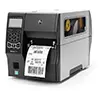








Quick Answer: RFID data center asset tracking uses RFID tags attached to servers, networking equipment, storage devices, and other IT assets to automate identification and inventory. RFID readers detect tagged assets without requiring individual line-of-sight barcode scans, helping data center teams conduct faster audits, locate equipment, monitor asset movement, and maintain more accurate physical inventory records.
Modern data centers depend on precise inventory management to maintain uptime, support compliance, and maximize operational efficiency. From servers and networking equipment to spare parts, cables, tools, and storage media, thousands of assets move throughout a facility every year.
Unfortunately, many organizations still rely on spreadsheets, barcode scans, or manual audits to track these assets. These methods are labor-intensive, prone to error, and often fail to provide real-time visibility.
RFID offers a better approach. By automatically identifying and tracking assets without requiring line-of-sight scanning, RFID gives IT teams continuous visibility into equipment locations, inventory levels, and asset movements.
In this guide, we'll walk through how to successfully deploy RFID in a data center—from planning and tagging to infrastructure, software, and ongoing optimization.
Why Deploy RFID in a Data Center?
An RFID deployment can help organizations:
- Reduce time spent performing inventory audits
- Improve asset inventory accuracy
- Locate equipment in seconds instead of hours
- Track servers throughout their lifecycle
- Monitor equipment entering and leaving secure areas
- Reduce misplaced or lost assets
- Improve maintenance and spare parts management
- Strengthen compliance and audit readiness
Whether managing a single server room or multiple colocation facilities, RFID provides the visibility needed to make better operational decisions.

Steps to Deploying RFID in a Data Center
A successful RFID deployment starts with careful planning rather than simply installing tags and readers. By taking a structured, phased approach, organizations can improve inventory accuracy, automate asset tracking, and maximize return on investment while minimizing disruption to day-to-day operations. The following steps provide a practical roadmap for planning, implementing, and expanding an RFID solution within a data center.
Define Your RFID Deployment Goals
Before purchasing RFID hardware or tagging assets, identify exactly what you want your RFID system to accomplish. Every data center has different priorities, whether that's improving inventory accuracy, reducing the time spent performing audits, locating misplaced servers, strengthening security, or managing spare parts more effectively.
Establishing clear objectives early in the project will help determine which assets should be tagged, where RFID readers should be installed, what business rules should be configured, and how success will be measured after deployment.
Identify the Assets You Want to Track
The next step is determining which assets will benefit most from RFID tracking. While some organizations eventually tag every IT asset, many deployments begin with the equipment that is most valuable, frequently moved, or difficult to inventory manually.
Common assets that are ideal for RFID tracking include:
- Servers and blade chassis
Network switches, routers, and firewalls - Storage arrays and backup appliances
- Spare parts and replacement components
- Network cables and transceivers
- Technician toolkits and diagnostic equipment
- Portable testing devices
- High-value IT assets and infrastructure
Tracking these assets with RFID creates real-time visibility into their location, movement, and lifecycle while significantly reducing the effort required for inventory management.

Choose the Right RFID Tags
Selecting the appropriate RFID tag is critical to achieving reliable read performance. Since much of the equipment found in a data center is constructed from metal, standard RFID labels are often not suitable. Instead, organizations typically use specialized on-metal RFID tags designed specifically for servers, networking equipment, storage devices, and other metallic assets.
Depending on the application, deployments may also include durable asset labels, compact tags for smaller components, hang tags for cables, and rugged RFID tags for tools or portable equipment. Choosing the correct tag for each asset ensures consistent read accuracy and long-term durability.
Plan Your RFID Reader Locations
Successful RFID deployments focus on monitoring key transition points rather than attempting to cover every square foot of a facility. By strategically placing fixed RFID readers in receiving areas, storage rooms, server room entrances, staging areas, repair depots, and loading docks, organizations can automatically capture asset movements without requiring technicians to perform manual scans.
Many data centers also supplement fixed infrastructure with handheld RFID readers, allowing technicians to quickly perform inventory audits, locate missing equipment, verify rack contents, and investigate exceptions whenever needed.
Build a Complete Asset Database
An RFID tag is only valuable if it is connected to meaningful asset information. As tags are applied, each one should be associated with detailed information such as the asset ID, serial number, manufacturer, model, rack location, purchase date, warranty information, maintenance history, ownership, and lifecycle status.
This creates a complete digital record for every asset, allowing technicians to instantly identify equipment and maintain accurate inventory records throughout its lifecycle.
Configure Intelligent Alerts and Automation
One of the greatest advantages of modern RFID software is its ability to automate decision-making through configurable business rules. Instead of relying on manual monitoring, organizations can receive real-time notifications whenever predefined events occur.
Examples of automated RFID workflows include:
- Alerting when servers leave secure rooms
- Detecting unauthorized asset movement
- Identifying missing equipment during inventory audits
- Notifying staff when spare inventory falls below minimum levels
- Tracking maintenance tools that have not been returned
- Monitoring high-value asset movement after business hours
- Recording equipment transfers between racks or facilities
- Automatically updating inventory records as assets move
These automated workflows improve security, accountability, and operational efficiency while reducing the burden on IT staff.

Validate Your Initial RFID Inventory
Once RFID tags and readers have been deployed, perform a comprehensive inventory to establish an accurate baseline. This initial validation process confirms that every RFID tag is functioning correctly, assets are associated with the proper records, rack locations are accurate, and duplicate or missing records have been resolved.
Establishing a clean baseline ensures future inventories remain accurate and provides confidence that the RFID system is capturing reliable data from day one.
Optimize and Expand Your Deployment
Many organizations begin with a single data center or one specific asset category before expanding RFID throughout the enterprise. After implementation, monitor key performance indicators such as inventory accuracy, audit completion times, equipment search times, asset utilization, labor savings, and overall operational efficiency.
As your RFID deployment matures, consider expanding it to support additional operational processes such as:
- Spare parts inventory management
- Tool tracking and accountability
- Automated receiving and shipping
- Rack-level inventory verification
- Preventive maintenance workflows
- Inventory replenishment
- Multi-site asset visibility
- Compliance reporting and audit support
A phased implementation allows organizations to realize measurable ROI while continuously expanding the value of their RFID investment.
RFID Frequently Asked Questions
Can RFID work on metal servers?
Yes. Specialized on-metal RFID tags are designed specifically for servers, networking equipment, storage devices, and other metal assets.
Do RFID readers need line of sight?
No. Unlike barcodes, RFID tags can typically be read without direct line of sight, allowing multiple assets to be identified simultaneously.
Can RFID integrate with existing asset management software?
Yes. Modern RFID platforms can integrate with CMDBs, DCIM platforms, ERP systems, IT asset management software, and custom applications through APIs and other integration methods.
How accurate is RFID inventory tracking?
When properly deployed, RFID systems commonly achieve inventory accuracy exceeding 99%, significantly reducing manual inventory errors.
What is the first step in deploying RFID?
Begin by identifying your business objectives and determining which assets, workflows, and locations will benefit most from automated tracking before selecting RFID hardware and software.
Interested in RFID?
An RFID tracking system can help organizations of all sizes improve their supply chain efficiency. Contact the CYBRA team to schedule a demo today.