









Quick Answer: Can RFID Track Location?
Yes. RFID can track the location and movement of tagged inventory, equipment, pallets, tools, and personnel within warehouses, factories, retail stores, healthcare facilities, and other controlled environments. RFID readers and antennas detect tags as they enter specific zones, pass through doorways, or move along conveyors, while RFID software converts those reads into real-time location events, movement history, alerts, and reports. Depending on the system design, RFID can provide zone-level visibility or more precise positioning through technologies such as RSSI, triangulation, and real-time location systems.
If you’re evaluating RFID for inventory management, asset tracking, or warehouse automation, one of the first questions you’ll likely ask is: can RFID track location?
The answer is yes — and it’s one of the biggest reasons RFID adoption is accelerating across modern supply chains. RFID (radio frequency identification) technology gives organizations the ability to automatically identify and track the movement and location of inventory, equipment, pallets, tools, and even personnel in real time.
Unlike traditional barcode systems, RFID tags do not require direct line of sight or manual scanning. RFID readers can capture dozens — or even hundreds — of tagged items simultaneously as they move through a facility, creating a faster, more automated way to monitor operations.
This real-time visibility helps businesses reduce lost inventory, prevent shipping errors, improve warehouse accuracy, and streamline workflows across manufacturing, distribution, retail, healthcare, and logistics environments.
What is RFID Location Tracking?
RFID location tracking uses radio frequency identification technology to automatically locate and monitor tagged assets, inventory, equipment, or other items as they move through a facility. By combining RFID tags, readers, antennas, and tracking software, organizations can gain real-time visibility into where critical items are, where they’ve been, and when they move—helping reduce search time, prevent loss, and improve operational efficiency.
RFID Location Tracking Usage is Growing
As companies continue investing in automation and smarter supply chain operations, RFID is quickly becoming a standard technology for organizations that need accurate location tracking and real-time operational insight.
In fact, industry research shows that 97% of supply chain organizations have already adopted RFID or plan to do so in the near future — highlighting just how essential the technology has become for modern tracking and visibility initiatives.
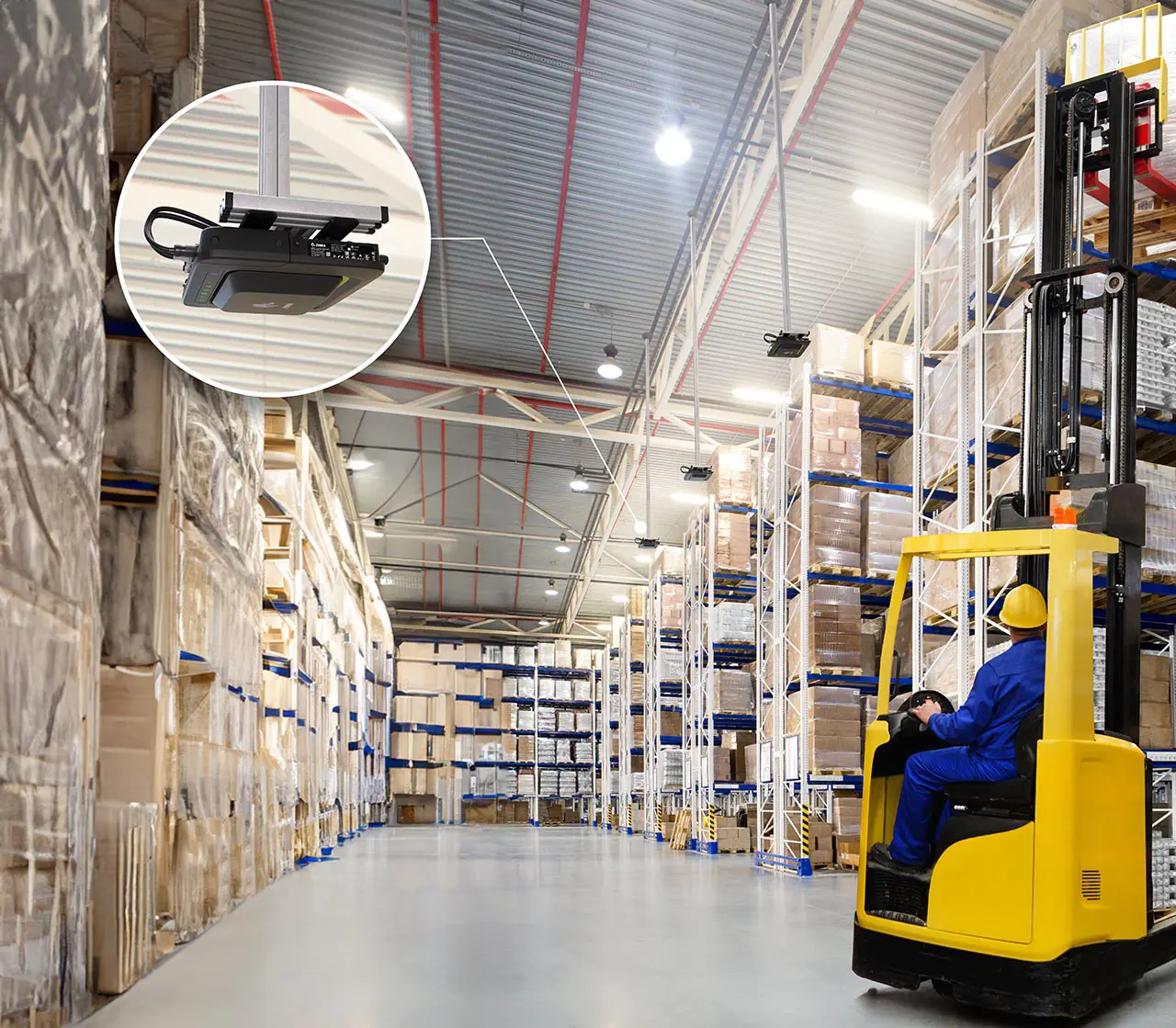
RFID antenna hung overhead to track the location of inventory and equipment.
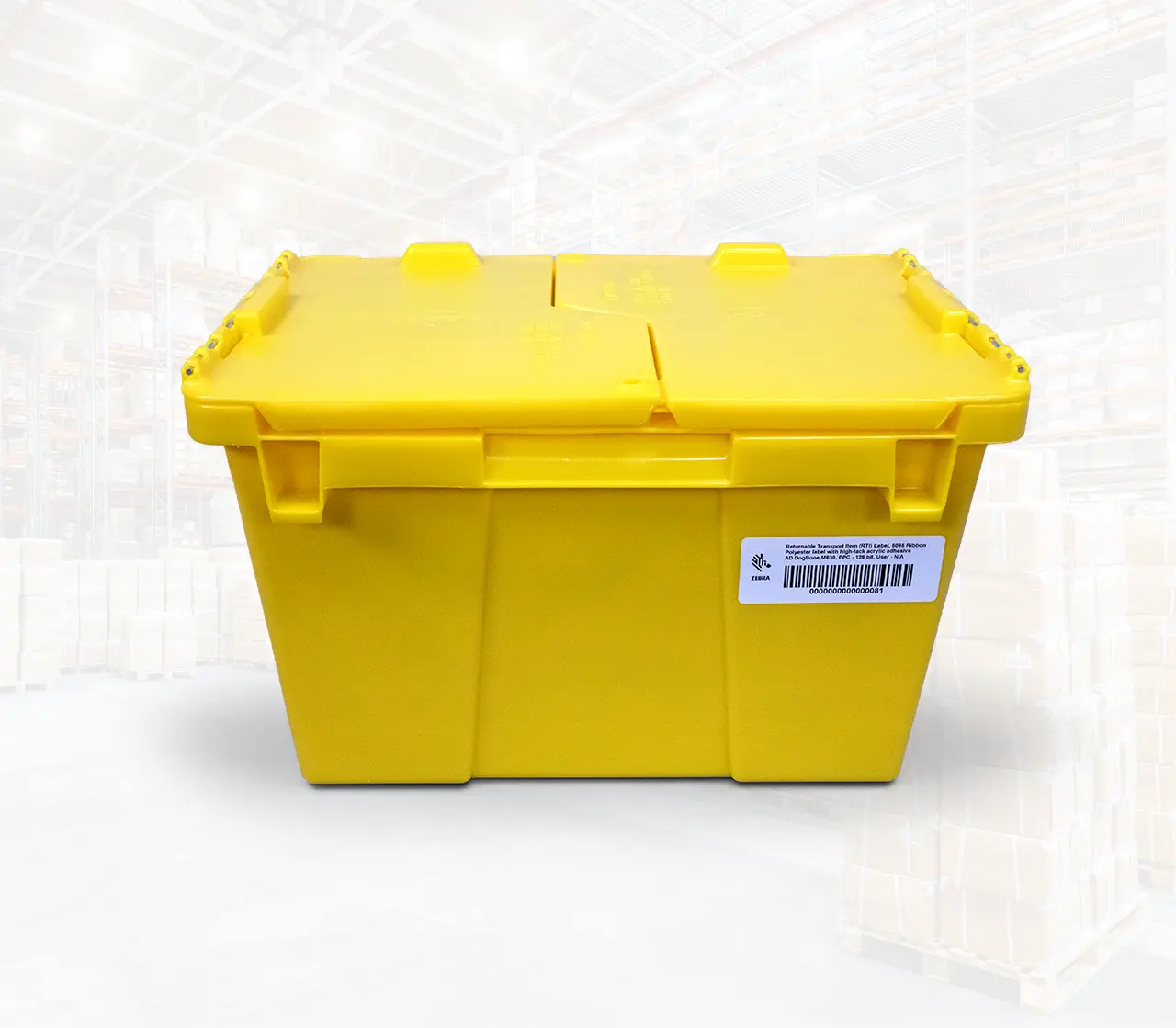
RFID tag affixed to a bin. WIth the tag affixed, the bin's location can be tracked within an RFID system.
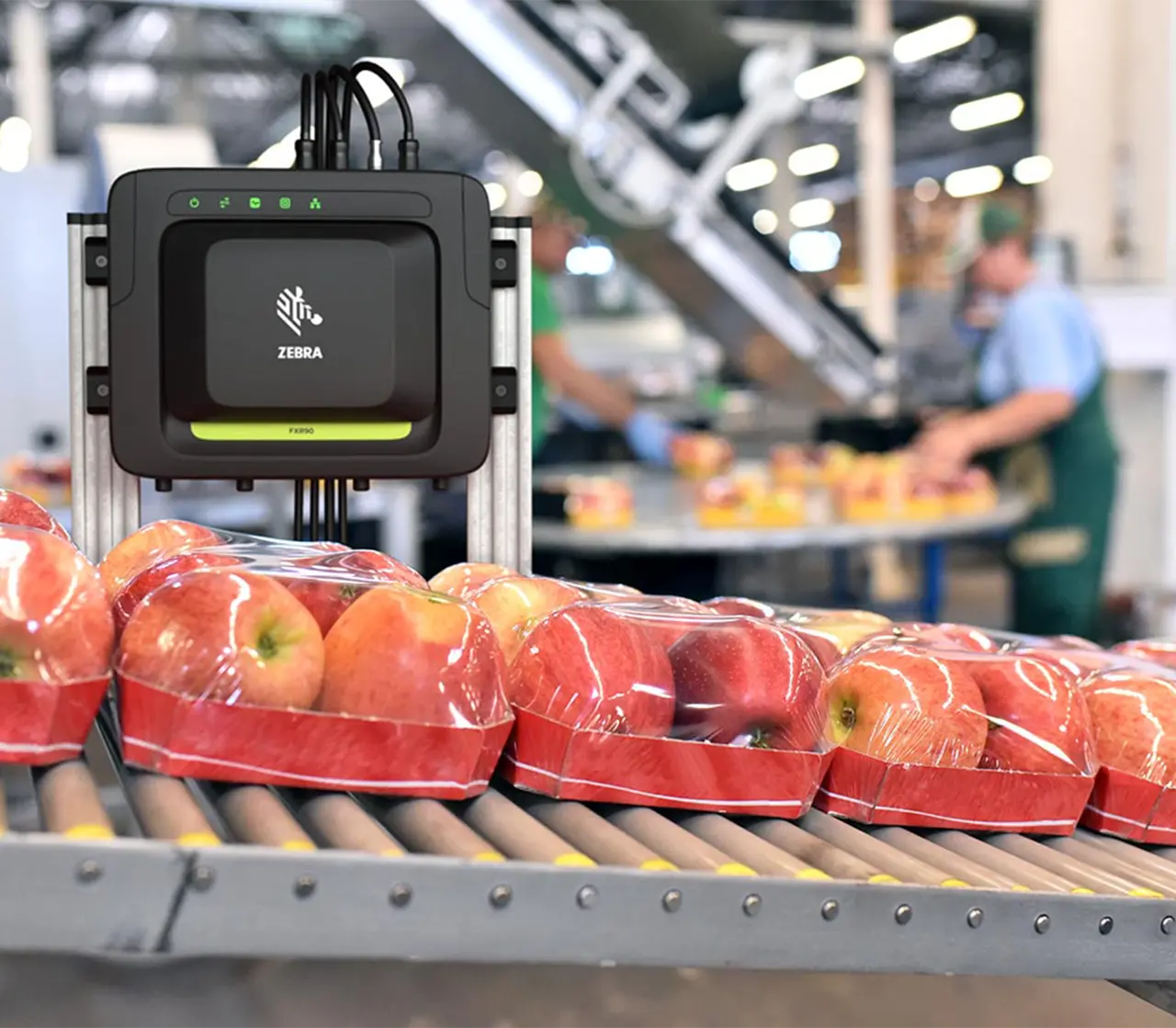
An RFID scanner strategically placed alongside a conveyor in order to track inventory moving along the supply chain.
How RFID Location Tracking Works
RFID location tracking works by using radio waves to automatically identify and locate tagged items as they move through a space—without requiring line of sight like barcodes.
Each item is equipped with an RFID tag that contains a microchip and antenna. These tags continuously respond to signals from RFID readers installed throughout a facility (such as dock doors, ceilings, conveyors, or specific zones). When a tagged item enters the read range, the reader captures its unique ID and timestamp, then sends that data to a centralized software platform.
From there, the system interprets where the item is based on which reader—or group of antennas—detected it. In more advanced setups, techniques like signal strength (RSSI), triangulation, or real-time location systems (RTLS) can pinpoint an item’s position within a few feet.
The result is a live, automated view of inventory movement and location—whether it’s tracking pallets through a warehouse, tools on a job site, or work-in-progress on a production floor—giving businesses real-time visibility, faster search times, and fewer lost or misplaced assets.
Key Components of an RFID Location Tracking System
-
RFID Tags (Transponders)
Attached to items, pallets, assets, or equipment. Each tag contains a microchip and antenna that stores a unique identifier. -
RFID Readers
Fixed or handheld devices that emit radio waves and capture signals from nearby tags to detect their presence. -
Antennas
Connected to readers and strategically placed (ceilings, doorways, zones) to define read areas and improve coverage. -
RFID Middleware / Edge Software
Filters, processes, and interprets raw read data—eliminating duplicates and translating reads into meaningful location events. -
Location Engine (RTLS / Positioning Logic)
Determines where an item is based on reader inputs using methods like zone-based tracking, RSSI, or triangulation. -
Centralized Platform / Database
Stores all tag reads, timestamps, and movement history for real-time visibility and reporting. -
User Interface (Dashboard / Application)
Displays live inventory locations, movement history, alerts, and analytics in an easy-to-use interface. -
Network Infrastructure
Connects readers and systems (Wi-Fi, Ethernet, or IoT networks) to ensure real-time data transmission.
How Accurate is RFID Location Tracking?
RFID typically delivers location accuracy within 1 to 5 meters, with most systems pinpointing assets in a 3–5 meter range. In enterprise environments, this level of accuracy is achieved about 90–95% of the time, providing reliable, room-level visibility across operations.
The Benefits of Adding RFID to a Supply Chain
RFID brings real, measurable advantages to any modern supply chain by replacing manual scanning and guesswork with fast, automated, location-aware data.
With RFID in place, organizations can automate routine tasks like counts, audits, and verifications, freeing staff to focus on higher-value work. Accuracy jumps dramatically as well: mis-picks, lost items, and paperwork mistakes drop because every read updates your system instantly.
That means tighter inventory control, fewer disruptions, and stronger overall supply-chain performance. Specific benefits include:
- Automated data capture – Eliminate manual scanning with hands-free, bulk reads
- Higher inventory accuracy – Achieve 95–99% accuracy with real-time updates
- Faster cycle counts – Complete counts in minutes instead of hours
- Reduced errors – Minimize mis-picks, lost items, and shipping mistakes
- Real-time visibility – Know exactly where inventory and assets are at all times
- Improved labor efficiency – Free up staff for higher-value tasks
- Enhanced traceability – Track items across every stage of the supply chain
- Stronger security – Monitor movement and prevent unauthorized activity
RFID also makes your operation more resilient. Whether you’re tracking goods through a warehouse, tools across a production line, or staff within critical areas, the technology helps you ensure safety, maintain compliance, and enforce security policies.
The result is a supply chain that runs leaner, smarter, and with a level of precision that barcodes alone simply can’t deliver. Below are some specific ways in which RFID can positively impact an organization's operations.
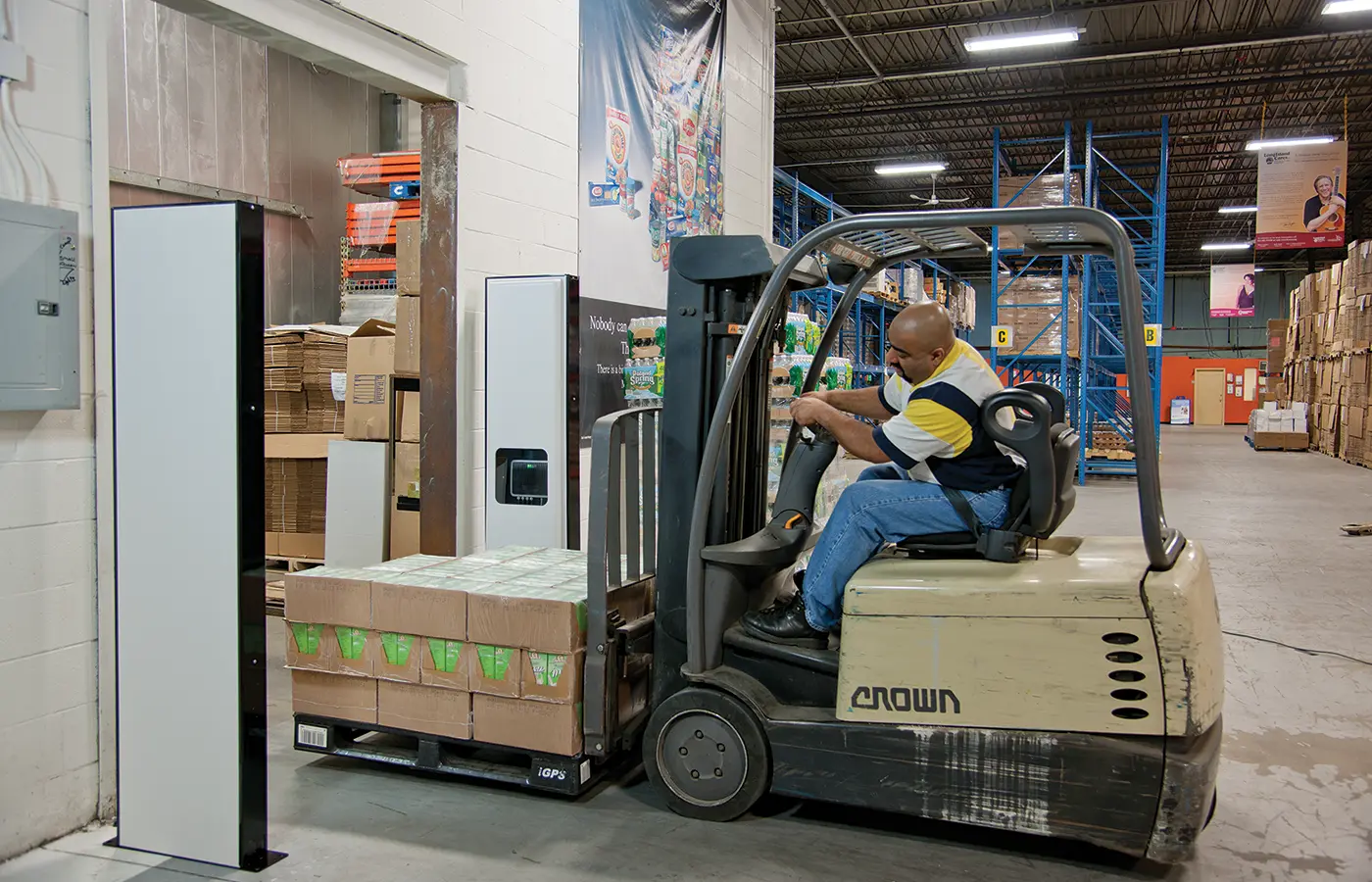
RFID Location Tracking Use Cases
From warehouses and manufacturing floors to retail and logistics, RFID is transforming how businesses track, manage, and move assets in real time. Below are some of the most common use cases where RFID location tracking drives measurable improvements in visibility, accuracy, and operational efficiency.
Inventory Management
RFID technology can be used to track the location of inventory throughout warehouses, retail stores, and other large environments. It can help reduce human errors in stock-taking, eliminate losses and stolen goods, and streamline inventory processes.
An RFID system works by placing tags on items, which can then be scanned by readers. These readers can be mounted on walls, ceilings, doors, and other surfaces.
When a tag is scanned by the reader, the system sends a signal to the tag, which then starts working. Depending on the type of reader, it can also communicate with a database to update the information in real time.
There are two main types of RFID readers. These include fixed and mobile (handheld) readers. Handheld devices are battery-powered and allow the user to update information in real time.
Equipment Tracking
If you run a rental hire company, or you’re moving large assets between locations, an RFID tracker can help you track their location in real time. This helps your teams ensure they’re checking in and out properly and prevents costly errors.
Equipment RFID Can Track
- Assembly Line Equipment
- Injection Molding Machines
- Printing and Packaging Machines
- Forklifts
- Pallet Jacks
- Conveyor Systems
- Personal Protective Equipment (PPE) Inventory
- Automated Guided Vehicles (AGVs)
- Servers and Networking Equipment
- Mobile Devices and Tablets
RFID technology also helps reduce labor costs by automating the inventory count and reducing the need for manual counting. This saves companies a lot of time and money on inventory management, and it’s often more accurate than manual inventory counts, too.
RFID is also useful for tracking the movement of small, expensive movable items, such as fax machines, laptops and office chairs. It’s a better alternative to barcode or GPS tracking systems for these types of assets because it’s more secure and doesn’t require scanning, which can be difficult in harsh weather conditions.
Monitoring Personnel Safety
Many businesses use RFID technology to track the location of personnel. This can be an excellent way to ensure security, reduce costs and improve productivity.
Traditional asset tracking by using barcode, engraved codes or serial numbers means that staff must find the tag (sometimes very difficult if covered in mud or dirt, under desks or behind heavy equipment), scan it and then physically input the tag into a tracking system. This process is time consuming and ineffective.
With a portable RFID reader that's built into a mobile computer, staff can scan several items at once without having to locate or see the tags.
This can be a very useful tool in tracking employees who need to be mustered for an emergency or special event.
RFID systems are also ideal for a wide range of applications in warehouses and inventory management, including tracking the location of equipment and assets. This can help retailers avoid out-of-stock situations and minimize inventory loss.
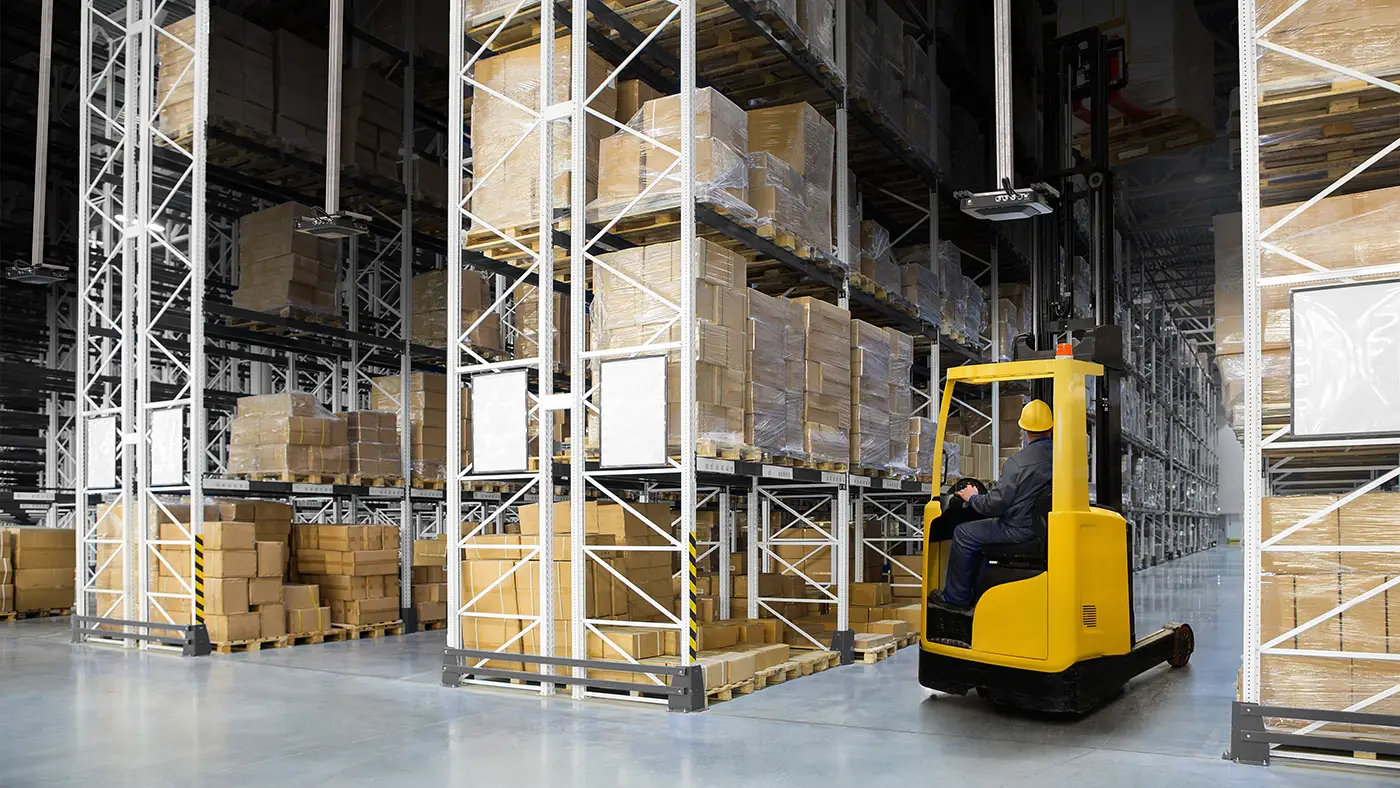
RFID antennas installed in an overhead fashion within a warehouse
Enforce Security Policies
Aside from keeping track of inventory, RFID technology also helps organizations identify people and monitor their location. They can detect people who stray away from their assigned locations and help prevent theft, shoplifting, or other problems.
In addition, RFID allows organizations to track assets like equipment and vehicles in the field and verify that they have been inspected. This information can be useful for insurance and regulatory requirements.
There are several different types of RFID tags, including beacon tags that periodically broadcast their location, and transponder tags that only transmit their information when queried by an active RFID reader.
Passive RFID badges, which have no onboard battery, are most common for personnel tracking. They are less expensive than active tags and can be used in places that do not require high-range readings, such as indoor facilities or areas with low ceilings.
Aside from the obvious security benefits, RFID can help companies improve productivity. It can save time and money by freeing up employees to focus on more important tasks. It can also reduce administrative error, and make it easier to comply with compliance regulations.
How to use RFID in Your Warehouse

How to Use RFID in Your Operations
RFID tags, readers, firmware, and transponders all work in concert with each other, but in order to organize and evaluate the data everything you will need some kind of RFID software application. Modern RFID software products include a frontend that allows user to visualize data with graphs, charts, and reports.
For active RFID applications, some RFID software systems will show live data and real-time movement of inventory, equipment, or personnel. Your specific business needs will dictate what kind of RFID software you should work with. But once your hardware and software are set up in your environment you will start to see positive changes in your day-to-day operations - improved efficiency and less errors without slowing down your team.
Interested in RFID?
An RFID tracking system can help organizations of all sizes improve their supply chain efficiency. Contact the CYBRA team to schedule a demo today.