









RFID FAQs
When it comes to RFID, there are no stupid questions. Whether it’s pilot programs, best practices, compliance, or accessibility, we’re here to help.
Our team of RFID experts will review your questions and provide clear, practical answers. With nearly two decades of hands-on RFID experience, we’ve seen it all—so fire away.
Table of Contents
- What Are RFID Chips?
- Are RFID Tags Waterproof?
- What Is the Best RFID Hardware for Mid-Sized Manufacturing Plants?
- Can RFID Tags Be Reused?
- How Long Do RFID Tags Last?
- Do RFID Tags Need Batteries?
- How Many RFID Tags Can Be Read at Once?
- How Does RFID Enable Faster Dock-to-Stock Processes?
- Can You Use RFID for Forklift Tracking?
- Do We Need to Change Our ERP or WMS in Order to Use an RFID System?
- Can RFID Integrate with Our Existing Barcode System?
- Can RFID Help Us with Compliance or Vendor Mandates?
- How Long Does It Take to Deploy an RFID System in a Warehouse?
- What's the Difference Between Passive and Active RFID?
- How Accurate Is RFID Compared to Barcode Scanning?
- What Kind of ROI Can We Expect from an RFID Pilot Project in Our Facility?
What Are RFID Chips?
RFID chips are small electronic components used in radio frequency identification (RFID) tags to store and transmit identifying data. When combined with an antenna, the chip allows an RFID tag to communicate wirelessly with an RFID reader.
Are RFID Tags Waterproof?
Yes — many RFID tags are waterproof, but not all of them are.
RFID tags come in a wide range of materials and designs. Standard paper label RFID tags are not fully waterproof and are typically intended for dry indoor environments like warehouses or retail stores. However, ruggedized RFID tags are specifically designed to withstand water, moisture, and harsh environmental conditions.
What is the Best RFID Hardware for Mid-sized Manufacturing Plants?
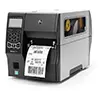
The best RFID hardware for a mid-sized manufacturing plant typically includes passive UHF RFID tags, fixed readers at key checkpoints, handheld RFID readers, strategically placed antennas, and an RFID printer/encoder. Fixed readers automate tracking at receiving, production, and shipping points, while handheld readers are useful for cycle counting, inventory searches, and exception handling. For most mid-sized facilities, this combination provides a scalable and cost-effective way to track inventory, work-in-process, tools, and finished goods without requiring an overly complex RFID infrastructure.
Can RFID Tags be Reused?
Many RFID tags can be reused, but it depends on the tag type and application. Most passive read/write RFID tags can be erased or re-encoded with new data if they haven't been permanently locked or damaged. However, some RFID tags are designed for one-time use, while others—such as reusable asset, pallet, tote, and laundry tags—are built to withstand thousands of read and write cycles. Before reusing an RFID tag, verify that the tag's memory is rewritable, the tag remains physically intact, and your RFID software updates the associated records to prevent tracking errors.
How Long Do RFID Tags Last?
Most passive RFID tags can last 10 years or more because they have no battery or moving parts. Their actual lifespan depends largely on environmental conditions such as heat, moisture, chemicals, UV exposure, and physical wear. Active RFID tags, which contain batteries, typically last around 3–5 years before the battery needs to be replaced. For most inventory and supply chain applications, a properly selected passive RFID tag can remain functional for many years with little to no maintenance.
Do RFID Tags Need Batteries?
Most RFID tags do not need batteries. Passive RFID tags are powered by the radio signal transmitted by an RFID reader, allowing them to operate without an internal power source. This makes passive tags inexpensive, compact, and capable of lasting for many years. Active RFID tags, however, contain their own battery, which enables longer read ranges and additional capabilities. For most inventory, manufacturing, retail, and supply chain applications, passive UHF RFID tags are the most commonly used option.
How Many RFID Tags Can Be Ready at Once?
RFID systems can read hundreds or even thousands of RFID tags within seconds, depending on the reader, tags, environment, and system configuration. Unlike barcodes, RFID tags do not need to be scanned individually or have a direct line of sight. This makes RFID especially useful for rapidly counting inventory, verifying shipments, tracking work-in-process, and identifying large groups of tagged items at once.
How Does RFID Enable Faster Dock-to-Stock Processes?
RFID enables faster dock-to-stock processing by automatically identifying entire shipments as they move through receiving. Instead of scanning each item or case individually, RFID can read many tagged products simultaneously without direct line of sight. Inventory can then be verified and updated in real time, helping businesses reduce receiving labor, catch shipment discrepancies sooner, and move goods from the loading dock into available inventory faster.
Can You Use RFID for Forklift Tracking?
Yes. RFID can be used to track forklifts and other material-handling equipment throughout a facility. RFID readers and tags can automatically record when forklifts enter or leave designated areas, interact with tagged inventory, or pass through key checkpoints. This gives warehouses and manufacturing plants better visibility into forklift location and activity, helping improve asset utilization, reduce search time, optimize workflows, and enhance workplace safety.
Do We Need to Change Our ERP or WMS in Order to Use an RFID System?
No. In most cases, you do not need to replace or significantly change your existing ERP or WMS to implement RFID. RFID software can integrate with existing business systems to automatically capture RFID data and pass relevant information into your current workflows. This allows manufacturers, warehouses, and distribution centers to add real-time RFID tracking while continuing to use the ERP or WMS systems they already rely on.
Can RFID Integrate with Our Existing Barcode System?
Yes. RFID can integrate with and complement an existing barcode system. Businesses can continue using barcodes where they make sense while introducing RFID for processes that benefit from faster, automated data capture and bulk scanning. A hybrid RFID and barcode system allows manufacturers, warehouses, and distribution centers to adopt RFID gradually without replacing their existing labeling, scanning, or inventory workflows.
Can RFID Help Us with Compliance or Vendor Mandates?
Yes. RFID can help businesses meet customer, retailer, and industry compliance requirements more efficiently. An RFID system can automate tag encoding, verify that the correct RFID tags are applied to products or shipments, and capture data needed for compliance reporting. This can help reduce tagging errors, avoid rejected shipments or chargebacks, and make it easier to comply with RFID mandates from major retailers and trading partners.
How Long Does it Take to Deploy an RFID System in a Warehouse?
An RFID system can often be deployed in a warehouse within a few weeks to several months, depending on the size of the facility, number of RFID read points, existing infrastructure, and required software integrations. A smaller deployment focused on a specific process can be implemented relatively quickly, while a facility-wide RFID system may require more time for site surveys, hardware installation, integration, testing, and employee training.
What's the Difference Between Passive and Active RFID?
The main difference between active and passive RFID is how the tags are powered. Passive RFID tags have no internal battery and are powered by the RFID reader’s signal, making them smaller, less expensive, and well suited for inventory, manufacturing, and supply chain applications. Active RFID tags contain their own battery, allowing for longer read ranges and continuous or periodic signal transmission, but they are typically larger and more expensive.
How Accurate is RFID Compared to Barcode Scanning?
RFID can provide highly accurate data capture while scanning items much faster than traditional barcodes. Unlike barcode scanning, RFID does not require direct line of sight and can identify multiple tagged items at once. When properly designed and configured, RFID systems can achieve 99%+ read accuracy in many inventory, warehouse, and manufacturing applications while reducing the manual scanning and human error associated with barcode-based processes.
What Kind of ROI Can We Expect from an RFID Pilot Project in Our Facility?
The ROI from an RFID pilot project typically comes from reduced labor, greater inventory accuracy, fewer shipping and picking errors, and improved asset visibility. Results vary by facility and use case, but a well-designed pilot can quickly demonstrate measurable improvements in processes such as inventory counting, receiving, order verification, and work-in-process tracking. The best RFID pilots establish baseline costs and performance metrics beforehand so businesses can calculate potential savings and determine whether a larger deployment makes financial sense.
We're Here to Make RFID Easy
RFID can be tricky — from picking the right tags and fixing read errors to installing hardware and rolling out a full system. If you’re adding RFID to your operations, chances are you’ll hit a few bumps along the way.
Get in touch with our experts today and we’ll help you map out the smartest path forward — no pressure, just real guidance. Let’s make RFID work for you.