









RFID is a powerful technology that can be applied to improve inventory accuracy and speed up supply chain processes. It also reduces time spent on circulation duties and speeds up in-store checkout by as much as 20%. This article will give you an overview of some of the advantages of RFID in retail and supply chain operations.
RFID is no longer an emerging technology—it’s a proven driver of efficiency, accuracy, and real-time visibility across modern operations. Today, RFID is used by manufacturers, retailers, healthcare providers, logistics companies, and governments around the world to track billions of items every year.

RFID vs Barcodes
Studies consistently show that organizations using RFID can achieve inventory accuracy above 95%, compared to roughly 60–70% with manual barcode scanning, while dramatically reducing labor and process friction.
Why RFID Matters in Today’s Supply Chains
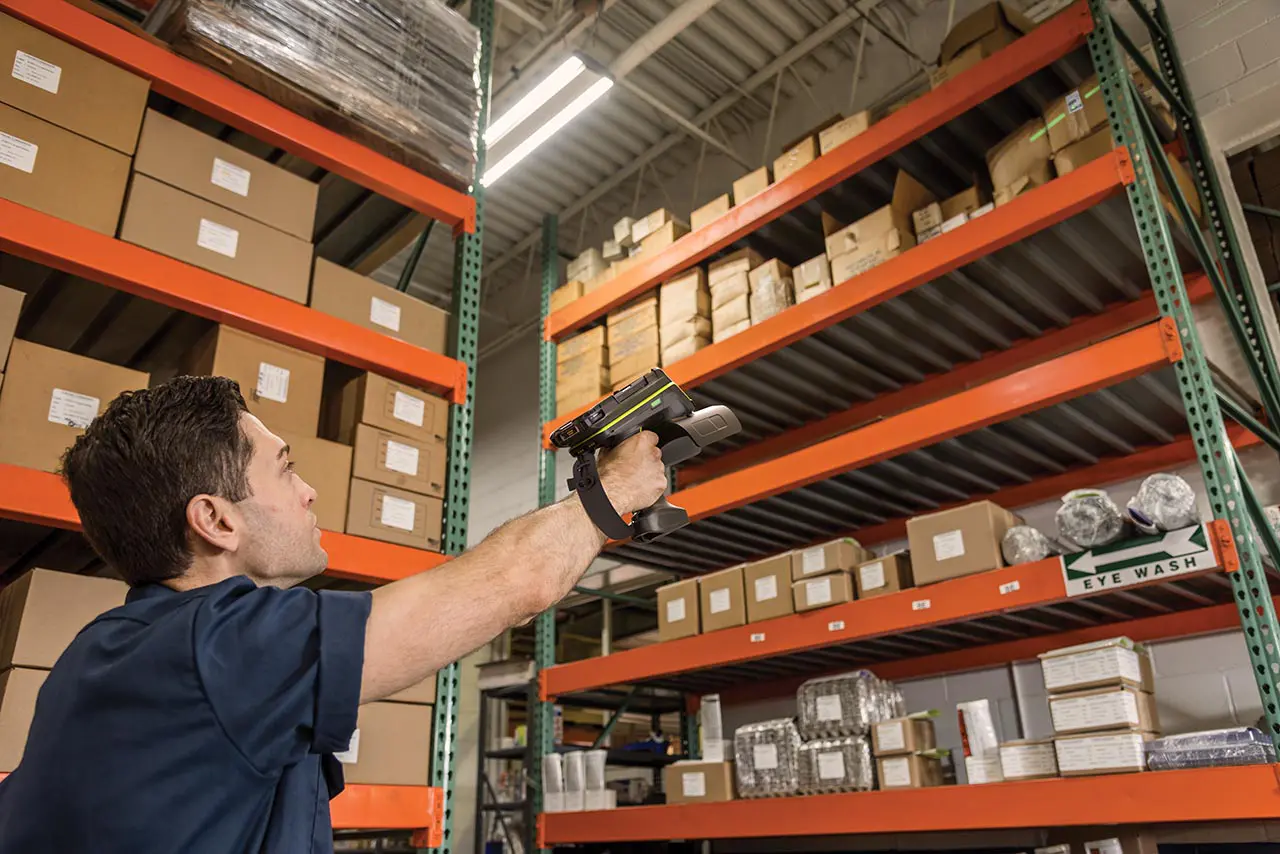
As supply chains grow more complex and customer expectations continue to rise, businesses need more than one-at-a-time scanning and delayed data. RFID enables automatic, bulk data capture, allowing dozens or even thousands of items to be identified in seconds—without line of sight.
The result is faster workflows, fewer errors, better traceability, and data that’s available the moment it’s needed.
In this guide, we’ll break down the key benefits of RFID technology, explain how those benefits translate into real-world results, and show why RFID has become a cornerstone of modern supply chain and asset-tracking strategies.
The Top 4 Benefits of RFID
RFID delivers value well beyond basic item identification. By automating data capture and eliminating one-at-a-time scanning, RFID helps organizations operate faster, more accurately, and with far greater visibility. Across industries, RFID has proven to reduce errors, cut labor costs, and provide real-time insight into inventory and asset movement.
While RFID can support dozens of use cases, most deployments consistently deliver value in four core areas.
1. RFID Improves Inventory Accuracy and Visibility
RFID dramatically improves inventory accuracy by automating item identification across the supply chain. While manual barcode-based processes typically deliver ~60–70% inventory accuracy, item-level RFID consistently pushes accuracy to 95–99%.
Because RFID does not require line-of-sight and can read many items at once, businesses can track inventory in real time—from production and warehousing to stores and returns. This reduces labor-intensive cycle counts, prevents stock from sitting unnoticed in back rooms, and minimizes issues like invoice disputes, misplaced items, and incorrect product mixing.
Retailers using RFID have also reported 10–15% improvements in item availability and fewer out-of-stocks, directly impacting sales.
2. Real-Time Tracking Across the Supply Chain
RFID provides continuous, real-time visibility into inventory and assets as they move through warehouses, distribution centers, transportation routes, and retail locations. Unlike barcodes, RFID can identify items in motion, inside cartons, or on pallets—without stopping operations.
This real-time data helps organizations:
- Detect shipment discrepancies immediately
- Identify tampering or misroutes
- Optimize replenishment and distribution schedules
- Improve accountability for high-value assets
RFID is widely used beyond retail, including food, pharmaceuticals, healthcare, manufacturing, and logistics, where traceability and accuracy are critical.
3. Faster Operations and Lower Labor Costs
RFID significantly reduces the time required for routine tasks like inventory counts, circulation duties, and checkout. In retail environments, studies show RFID can reduce checkout times by 20% or more, while freeing staff to focus on customer engagement.
Libraries, hospitals, and healthcare providers have also seen measurable gains. RFID-enabled systems reduce manual handling, speed up workflows, and improve staff satisfaction—particularly in high-volume environments.
4. Quickly Locate Misplaced or Lost Items
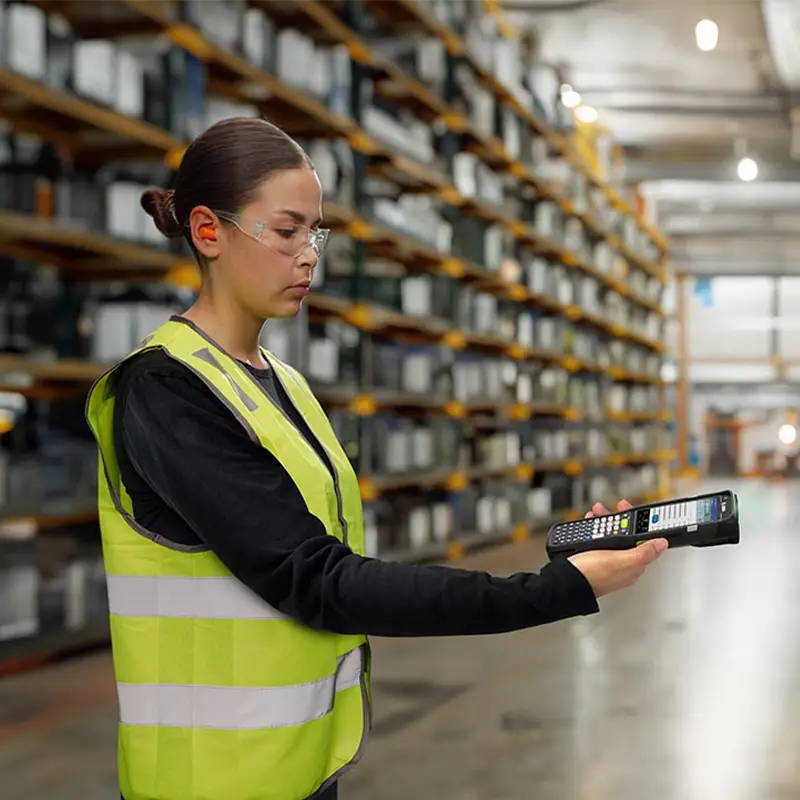
RFID makes it far easier to locate misplaced inventory, tools, equipment, and reusable assets. Instead of opening boxes or manually searching shelves, users can scan an area and instantly identify missing items.
This capability helps organizations:
- Recover lost or misplaced stock
- Reduce shrink and loss
- Reconcile inventory faster
- Maintain near-real-time inventory accuracy
For many businesses, RFID becomes both an inventory control tool and a loss-prevention strategy, delivering measurable ROI in months—not years.
💡Where RFID Makes the Biggest Impact
RFID delivers the greatest value in high-volume, fast-moving environments where speed, accuracy, and real-time visibility are critical—such as warehouses, distribution centers, and manufacturing operations.
Conclusion: Why RFID Delivers Lasting Value
RFID has moved beyond pilot projects and niche use cases—it’s now a proven foundation for modern, data-driven operations. By delivering real-time visibility, near-perfect inventory accuracy, faster workflows, and stronger traceability, RFID helps organizations replace manual processes with automation that scales.
As supply chains grow more complex and expectations continue to rise, the ability to identify, track, and act on data instantly is no longer optional. Whether you’re looking to reduce errors, control costs, improve compliance, or gain deeper insight into inventory and assets, RFID provides a clear path forward.
The key is starting with the right use case, deploying RFID where it delivers the most value, and scaling with confidence. For organizations ready to move beyond one-at-a-time scanning, RFID isn’t just an upgrade—it’s a competitive advantage.