
Passive RFID is one of the most widely used and practical forms of RFID technology, powering everything from inventory tracking and asset management to work-in-process monitoring across modern supply chains. Unlike active RFID, passive tags operate without batteries, relying on reader signals to transmit data—making them small, durable, and highly cost-effective at scale.
In this complete guide, we’ll break down how passive RFID works, where it delivers the most value, and how organizations can use it to improve visibility, accuracy, and operational efficiency.
What is Passive RFID?
Passive RFID is a form of RFID that does not use a battery. Instead, passive tags reflect radio-frequency signals emitted from an RFID reader to identify assets and hardware.
This form of RFID is a cost-efficient solution for tracking lower-value, smaller items. It can also be used to monitor the movement of products and equipment in warehouses and manufacturing environments.
| Feature | Passive RFID | Active RFID |
|---|---|---|
| Power source | Powered by the RFID reader | Built-in battery |
| Read range | Short to medium (inches to ~30 ft) | Long range (100–300+ ft) |
| Tracking type | Event-based (scan points) | Continuous, real-time tracking |
| Tag cost | Low | Higher |
| Tag lifespan | Long (no battery) | Limited by battery life |
| Maintenance | None | Battery monitoring/replacement |
| Data transmission | Responds only when read | Actively broadcasts signals |
How Passive RFID Works
Passive RFID is a type of RFID technology that does not use a built-in battery. Instead, passive RFID tags draw power from the radio signal emitted by an RFID reader, allowing them to transmit their data only when scanned.
Because they are small, durable, and low cost, passive RFID tags are widely used for tracking inventory, products, files, and assets at specific checkpoints. Passive RFID is ideal for applications where real-time location tracking isn’t required, but fast, accurate identification and validation are essential.

Tag
Item(s)

Reader Sends Signal

Tag Responds with Data

Data Captured in Real Time

Items or Info Updated
Advantages over Active RFID
Passive RFID offers several key advantages over active RFID in environments like warehouses and manufacturing plants. Most notably, passive RFID tags are smaller, more cost-effective, and require no battery, making them ideal for tracking large volumes of assets or inventory at scale. Because they are powered by the signal from the reader itself, passive tags have a longer lifespan and require less maintenance, which is especially valuable in high-traffic or rugged environments.
Additionally, passive RFID systems are easier to deploy in dense, metal-heavy areas like warehouse shelves or manufacturing zones, where active tags may suffer from signal interference or require more complex infrastructure. For operations focused on inventory accuracy, item-level tracking, and cost efficiency, passive RFID delivers a practical, scalable solution.
How Passive RFID is Used
Organizations commonly use passive RFID in environments that require cost-effective identification, high-volume scanning, and checkpoint-based tracking. Because passive tags draw power from the reader and do not broadcast signals continuously, they are ideal for applications that require accuracy and efficiency without real-time location tracking.
Common uses for passive RFID include:
- Inventory tracking for products, cases, and pallets
- Asset identification and audit verification
- Check-in and check-out processes for tools, files, and equipment
- Work-in-process (WIP) tracking at defined scan points
- Order validation and shipping verification
Organizations often choose passive RFID when items move through known locations and require fast, reliable identification. Understanding when to use passive versus active RFID helps organizations deploy the most efficient and cost-effective tracking solution.
2026 RFID Integration Guide
A complete guide that will help retail brand owners, manufacturers, and distributors reap great benefits from integrating RFID into their supply chain.
Passive RFID Use Cases
Passive RFID technology supports many use cases across a wide range of industries. Here are a few specific ways in which active RFID technology can be utilized:
Tracking Inventory
Passive RFID is a highly effective way to track inventory. Tags are small, lightweight, and easy to read, and when items are properly tagged and organized, read accuracy can exceed 99%.
In warehouses and distribution centers, passive RFID enables fast, automated inventory tracking by tagging individual items and scanning them at key points such as dock doors, storage zones, or packing stations. RFID portals and handheld readers allow multiple items to be scanned at once as inventory enters or exits a facility.
Compared to barcode-based systems, RFID inventory tracking reduces manual labor, improves visibility, and lowers costs while allowing more data to be stored on each tag for greater accuracy.
Work in Process Tracking
Tracking work in process is critical for maintaining efficient manufacturing operations. Without WIP visibility, production delays, errors, and excess inventory can quickly occur.
Passive RFID helps manufacturers track materials, components, and equipment as they move through production stages. RFID systems can automatically detect exceptions or process deviations, enabling faster corrective action and supporting lean manufacturing initiatives.
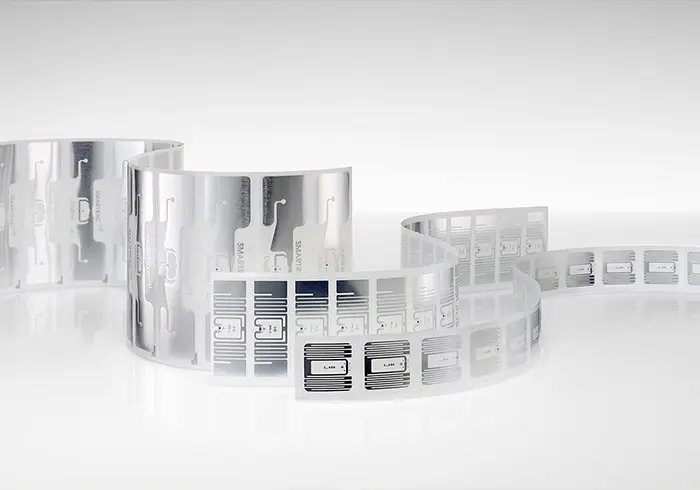
Manufacturers can embed passive tags in equipment or apply them as labels, even in harsh environments.
Asset Tracking
Asset tracking is essential but often labor intensive when done manually or with barcodes. Passive RFID offers a more automated and accurate alternative by enabling assets to be identified without line-of-sight scanning.
Passive RFID is a popular option for asset tracking because it uses low-frequency radio waves and doesn’t require batteries. Teams can deploy this type of tag easily on both static and moving assets that aren’t constantly changing locations.
By reducing manual scans and data entry, RFID-based asset tracking improves operational efficiency, reduces losses, and frees staff to focus on higher-value work.

How NAFECO Improves Work-in-Process System
with CYBRA’s RFID Software Application
NAFECO, a leading provider of safety gear for emergency responders, faced issues in tracking thousands of garments moving through its facility. To streamline its work-in-process operations, NAFECO implemented CYBRA’s Edgefinity IoT RFID software.
Other Use Cases
In addition to core functions like inventory tracking, asset management, and work-in-progress monitoring, passive RFID supports a range of specialized applications in manufacturing and distribution environments. These lesser-known use cases help organizations streamline compliance, improve safety, and tighten control over internal processes.
Some examples include:
- Tool calibration tracking – Automatically log and monitor calibration schedules for mission-critical tools and equipment.
- PPE and uniform monitoring – Ensure employees are wearing the proper safety gear in restricted or hazardous zones.
- Quality control linkage – Connect components or batches to inspection results, test reports, or compliance documentation for easier traceability.
- Returnable packaging identification – Track reusable containers, pallets, or bins as they move through closed-loop supply chains.
- Access control for restricted equipment or zones – Use RFID to grant or restrict access to high-risk machinery or controlled inventory areas.
These use cases demonstrate how passive RFID can go far beyond basic tracking—delivering value in compliance, safety, and resource optimization.
Passive RFID Benefits
There are numerous innovative ways to use passive RFID to improve efficiency and accuracy in a variety of industries. Once an organization deploys RFID, teams gain greater operational visibility and efficiency.
Here are some additional benefits of using passive RFID:
- Low cost: Passive RFID tags are relatively inexpensive, which makes them a cost-effective solution for many applications.
- Ease of use: Passive RFID tags are easy to use and can be applied to a variety of objects.
- Range: Passive RFID tags have a range of up to 100 meters, which makes them suitable for a variety of applications.
- Durability: Passive RFID tags are durable and can withstand harsh environments.
- Security: Passive RFID tags can be encrypted to protect data.
Overall, passive RFID provides a versatile way to improve efficiency and accuracy across many industries.
Getting Started with an RFID Pilot Program
Whether you're managing a warehouse, production facility, or retail operation, the benefits of passive RFID are clear: greater visibility, fewer errors, faster processes, and smarter use of labor and assets. To unlock these advantages, the best first step is launching a focused RFID pilot program.
Start by identifying a specific use case—like inventory management or asset tracking—and define clear goals around accuracy, efficiency, or labor savings. From there, choose the right tags, readers, and software platform to support your needs, and monitor the results closely. A well-executed pilot can demonstrate immediate value while building the foundation for a scalable, long-term RFID strategy.
Interested in RFID?
An RFID tracking system can help organizations of all sizes improve their supply chain efficiency. Contact the CYBRA team to schedule a demo today.