









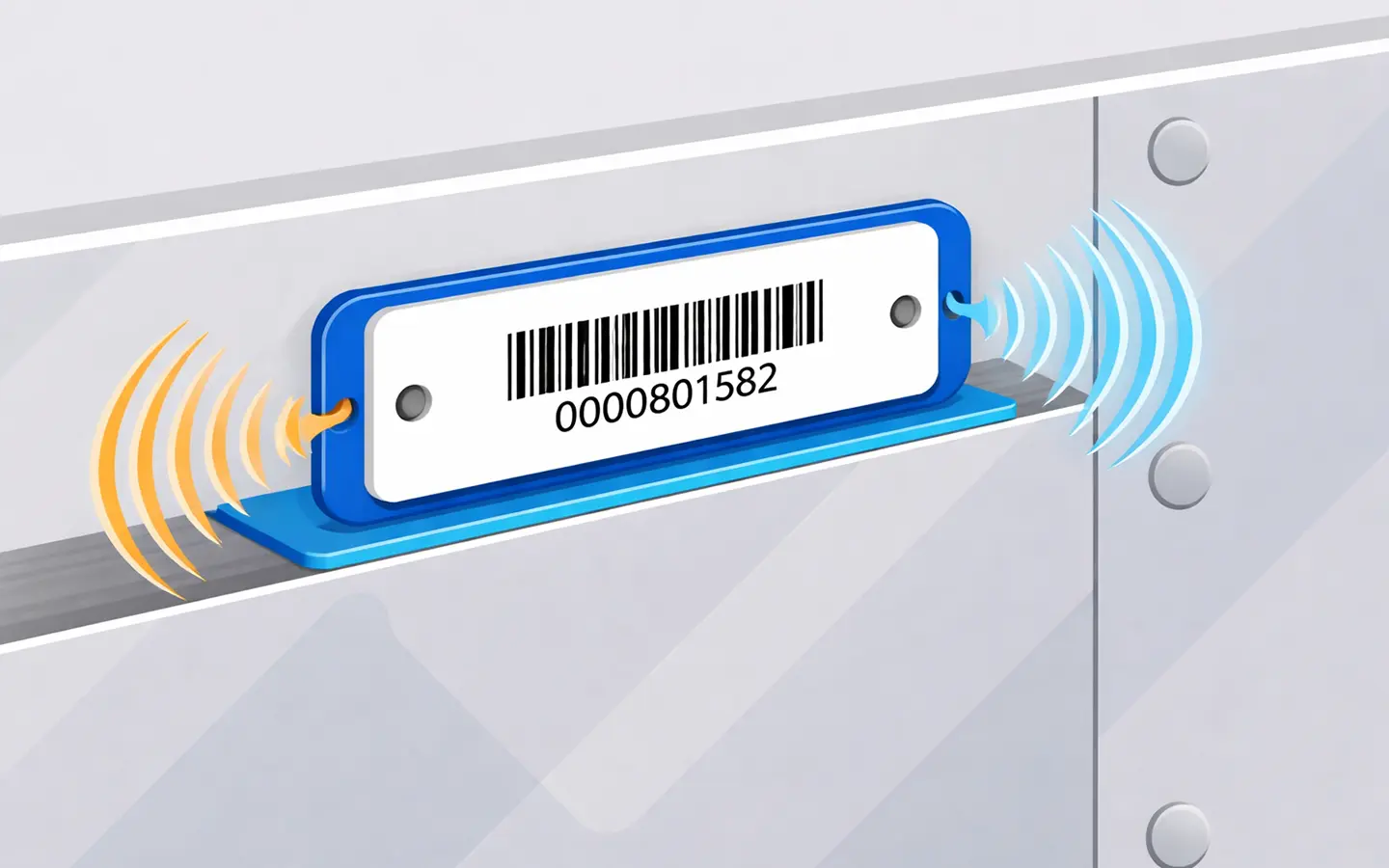
RFID technology is widely used for tracking assets and inventory, but traditional RFID tags often struggle when placed on metal surfaces. Metal can interfere with radio frequency signals, causing poor read performance or complete signal loss. RFID anti-metal tags are specifically designed to overcome this challenge.
The Challenge with Metal
Standard RFID tags rely on antennas to transmit and receive radio waves. When placed directly on metal, the surface interferes with this communication in two key ways:
- Signal Reflection: Metal reflects RF signals, disrupting communication between the tag and reader.
- Antenna Detuning: The metal surface alters the antenna’s tuning, reducing read range or making the tag unreadable.
As a result, reliable tracking becomes difficult in environments like manufacturing, aerospace, and IT asset management—where metal is everywhere. Traditional RFID labels often struggle to perform on items such as machinery, tools, racks, and containers.
⚡Environmental interference (like metal and machinery) is one of the top factors impacting RFID performance and read accuracy.
Introducing Anti-Metal RFID Tags
Anti-metal RFID tags are specifically engineered to perform where standard tags fail—on or near metal surfaces. Instead of being disrupted by metal, these tags are designed to work with it, maintaining strong, reliable communication between the tag and the reader.
They achieve this through specialized construction, including built-in isolation layers and tuned antennas that prevent interference. Many also incorporate ferrite backing to manage signal behavior and improve read performance in high-metal environments.
The result? Consistent read accuracy, extended range, and dependable tracking—even on metal assets like equipment, tools, racks, and containers.
Whether applied as thin labels or rugged hard tags, anti-metal RFID tags make it possible to bring item-level visibility to environments that were once off-limits for RFID.
What Makes Anti-Metal RFID Tags Different?
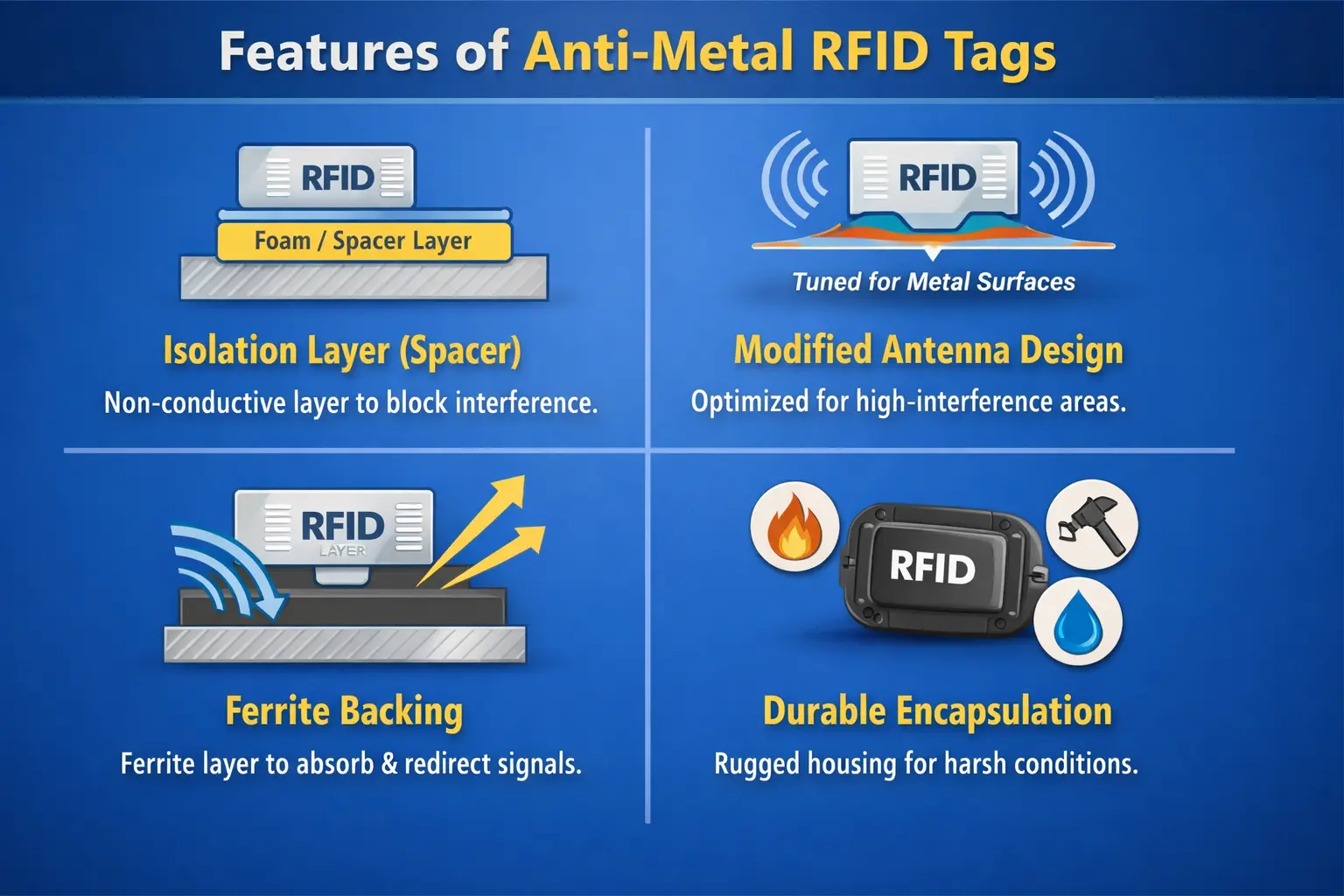
RFID anti-metal tags are specifically engineered to function on (or near) metal surfaces. They achieve this through specialized design features:
1. Isolation Layer (Spacer)
Anti-metal tags include a non-conductive layer—often foam, plastic, or ferrite—between the antenna and the metal surface. This creates separation, preventing the metal from interfering with the antenna’s signal.
2. Modified Antenna Design
The antenna in an anti-metal tag is tuned differently than a standard RFID tag. It’s designed to maintain performance even in high-interference environments.
3. Ferrite Backing
Many anti-metal tags use a ferrite layer, which helps absorb and redirect electromagnetic energy. This reduces signal reflection and stabilizes performance.
4. Encapsulation for Durability
Anti-metal tags are often ruggedized to withstand industrial environments. They may be encased in hard plastic or rubber to resist:
- Heat
- Moisture
- Chemicals
- Physical impact
Types of Anti-Metal RFID Tags
There are several types available depending on the application:
On-metal labels: Thin, printable labels with a special backing for metal surfaces
Hard tags: Durable tags for tools, equipment, and outdoor use
Screw-mount or rivet tags: Designed for permanent attachment to assets
Common Use Cases
Anti-metal RFID tags are essential in industries where metal is everywhere:
- Manufacturing: Track tools, parts, and work-in-progress items
- Warehousing: Identify metal racks, bins, and containers
- IT Asset Tracking: Tag servers, laptops, and data center equipment
- Oil & Gas / Construction: Monitor heavy equipment in harsh environments
Benefits of Using Anti-Metal RFID Tags
- Reliable performance on metal surfaces
- Longer read ranges compared to standard tags on metal
- Improved inventory accuracy
- Reduced manual tracking and errors
Final Thoughts
RFID anti-metal tags solve one of the biggest limitations of RFID technology. By isolating the antenna and optimizing signal behavior, these tags make it possible to track metal assets just as easily as non-metal ones.
If your operation involves metal equipment, shelving, or containers, using the right RFID tag isn’t optional—it’s critical for performance.